
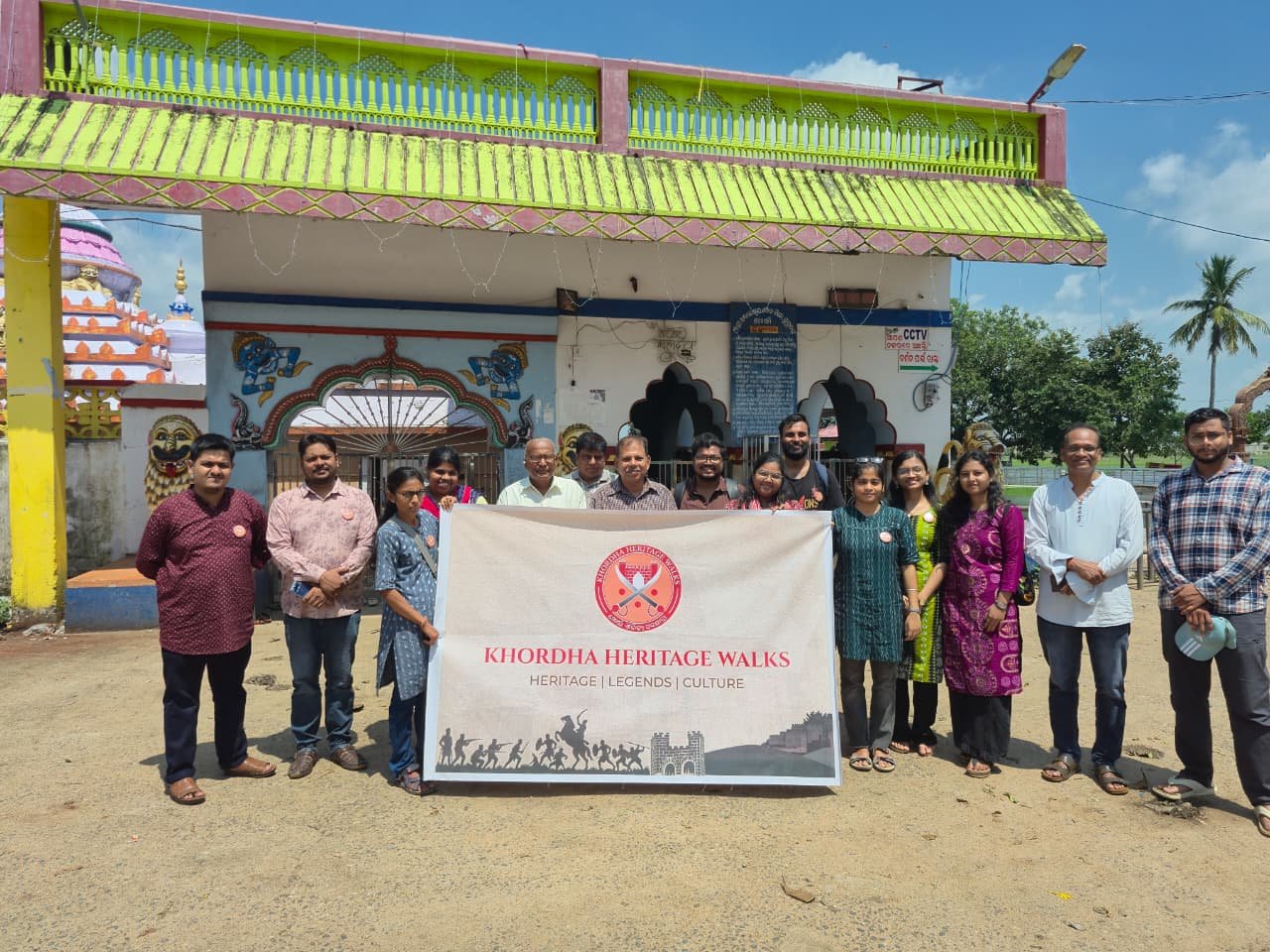
From Dhabaleswar shrine to Maa Anlei Peetha, the second edition connects young participants with the region’s religious, historical and cultural legacy.
Dillip Kumar Pattnaik
KHORDHA, SEPTEMBER 27:- Taking young people on a journey through the historical and cultural landscape of Khordha, the second edition of the Khordha Heritage Walk began at the sacred Dhabaleswar shrine, highlighting the region’s religious traditions, local history and the martial legacy of Odisha’s Paikas.
The walk brought together heritage enthusiasts, historians, journalists and young participants to explore significant sites, understand the historical evolution of local settlements and appreciate the traditions that have shaped the region’s cultural identity.
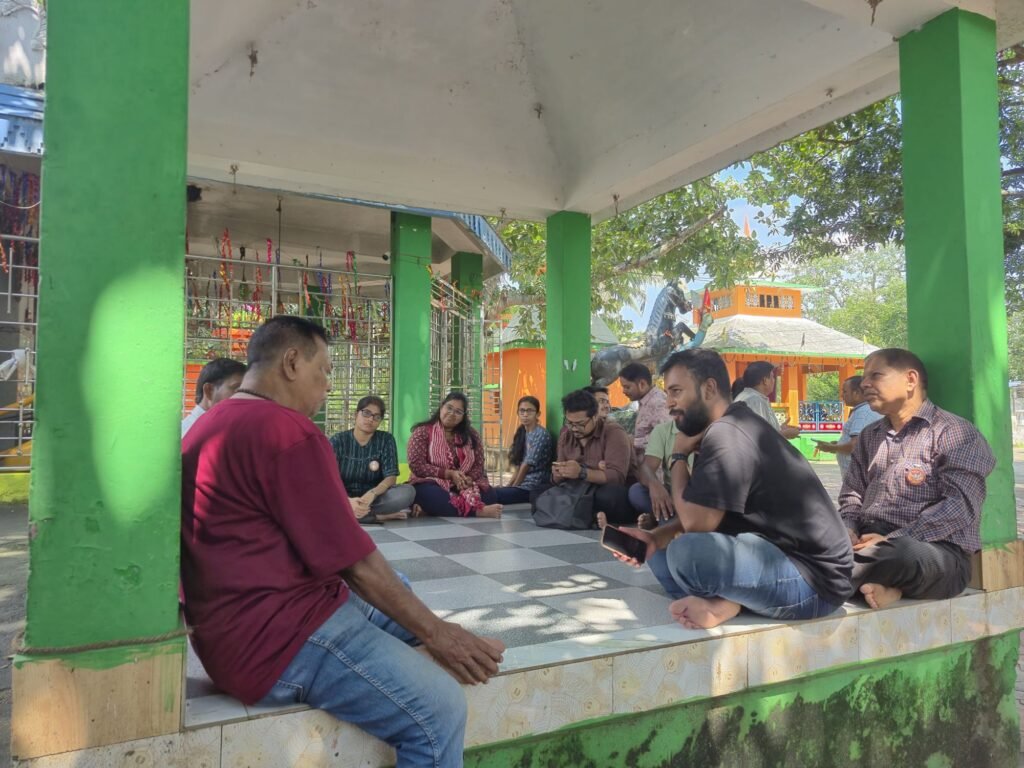
Organised with the objective of fostering awareness about Khordha’s rich heritage, the initiative covered the Dhabaleswar shrine and Maa Anlei Thakurani Peetha at Wilkinson Nagar. A demonstration of traditional Paika martial arts added a distinctive dimension to the programme, showcasing an important element of Odisha’s intangible cultural heritage.
The initiative sought to establish a closer connection between the younger generation and their roots, emphasising that heritage extends beyond monuments and historical records to encompass religious beliefs, local customs, traditional practices and collective memory.
Dhabaleswar shrine marks beginning of heritage journey
The programme commenced at the Sri Dhabaleswar shrine, where temple trust board member Badrinarayan Sahu welcomed the participants and briefed them on the shrine’s history, religious significance, traditional rituals and customs.
The interaction offered insights into the shrine’s place in the religious and cultural life of the region and underlined the role of traditional religious institutions in preserving local customs and passing on cultural knowledge across generations.
Eminent educationist and historian Satyabadi Balia Singh was also present on the occasion. He greeted the participants and spoke about the shrine’s religious traditions, historical associations and cultural importance.
The session highlighted how local places of worship can serve as important sources of knowledge about a region’s historical development, social traditions and cultural continuity.
Maa Anlei Peetha sheds light on Wilkinson Nagar’s past
The heritage walk subsequently proceeded to Maa Anlei Thakurani Peetha at Wilkinson Nagar, where senior journalist Gopal Pradhan explained the history and significance of the shrine, its rituals and festivals associated with the presiding deity.
He also spoke about the relationship between the shrine and the religious and social life of the local community.
The participants were acquainted with the origin of the name Wilkinson Nagar and the historical background of the settlement. The discussion explored the significance of place names, religious institutions and local traditions in understanding the evolution of human settlements and the cultural identity of a region.
The visit provided an opportunity for participants to appreciate how the history of a locality is reflected in its religious practices, community traditions and collective memory.
Paika demonstration highlights Odisha’s martial heritage
A major attraction of the programme was a demonstration of traditional Paika martial arts led by Paika guru Kabiraj Pradhan. Young Paikas displayed combat techniques using traditional weapons, offering participants a glimpse into Odisha’s martial traditions.
The demonstration highlighted the discipline, physical skill and courage associated with the Paika tradition, which occupies an important place in the State’s historical narrative.
Beyond its association with warfare, Paika martial art represents an enduring aspect of Odisha’s intangible cultural heritage. Its traditional techniques, weapons and practices reflect the distinctive martial culture that has evolved over generations.
The demonstration also drew attention to the importance of preserving indigenous art forms and encouraging young people to learn and practise traditional martial skills.
Organisers stressed that sustained efforts are necessary to ensure that such traditions remain relevant and are transmitted to future generations.
Youth engagement at the heart of conservation efforts
Khordha Heritage Walk convener Jyotsna Mohapatra proposed the vote of thanks, expressing gratitude to the guests, participants and others who contributed to the programme.
She outlined the objectives and future activities of the initiative, emphasising the need to identify and document historical sites, religious centres, traditional art forms and other cultural resources of the Khordha region.
The initiative aims to encourage citizens, particularly young people, to develop a deeper understanding of their local history and participate in efforts to preserve it.
The programme highlighted that heritage conservation requires collective responsibility, involving local communities, cultural organisations, researchers and citizens alongside government institutions.
By taking participants directly to historical and religious sites and facilitating interactions with historians and practitioners of traditional arts, the walk sought to make the region’s history more accessible and meaningful to the younger generation.
Heritage enthusiasts from across Odisha participate
The programme was attended by senior journalists Samarendra Balia Singh, Prabhat Panigrahi, Dillip Kumar Pattnaik and Pradeep Kumar Behera, among other distinguished personalities.
Heritage enthusiasts from Puri, Cuttack, Parikud, Pipili and other areas also joined the walk, encouraging the organisers and contributing to the programme.
The second edition of the Khordha Heritage Walk brought together diverse aspects of the region’s cultural inheritance, from religious shrines and the history of local settlements to traditional customs and the martial legacy of the Paikas.
The initiative reinforced the importance of exploring local history as a means of strengthening cultural awareness and preserving inherited traditions. By encouraging young people to engage directly with their surroundings, the organisers seek to nurture a sense of responsibility towards safeguarding Khordha’s historical and cultural wealth for future generations.

Subha Khabar is now on Whatsapp
Join and get latest news update delivered to you via whatsapp
Join Now